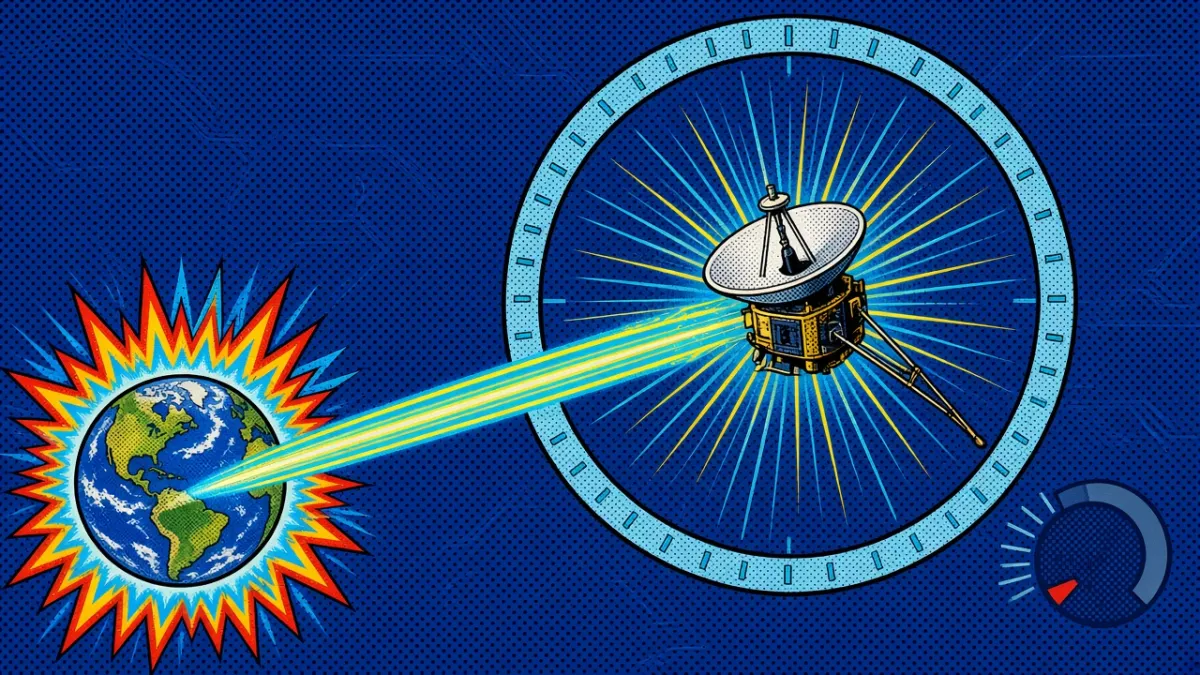
NASA has paused science on two of its Mars missions at once. In a blog post on November 19, the agency said the Perseverance rover stopped science after a problem with its UHF radios on October 30, and that the Mars Odyssey orbiter's instruments are offline after one of its reaction wheels stopped spinning in early November. NASA says both spacecraft are stable and in contact, and it's aiming to bring both back before the end of November.
Why it matters: NASA hasn't linked the two faults, but both hit the same system. Perseverance uses its UHF radios to send large volumes of data to orbiters, which relay it to Earth, and Odyssey is one of the orbiters in NASA's Mars Relay Network. For now the rover's UHF link is out of use, and so is Odyssey's relay role. Odyssey has also been at Mars longer than any other mission, and NASA's estimate of its fallback fuel is measured in weeks.
Perseverance: two radios, neither in use
According to NASA, the sequence went like this:
- October 30: the rover's primary UHF radio missed its "heartbeat" check: 25 in a row, about 100 seconds of silence. Fault protection powered it off, switched to the backup radio, and put Perseverance into safe mode.
- After recovery: engineers found the backup radio was transmitting at about half its expected power.
- Now: both UHF radios are switched off until the team decides whether either is safe to use. A JPL team is checking the backup first, then the primary.
In the meantime the rover is talking straight to NASA's Deep Space Network over X-band, through its high-gain antenna. NASA says that link has a "significantly lower data rate," so science is paused to keep the bandwidth for diagnostics. That includes cameras: Perseverance isn't taking new images, so the public raw-image feed has gone quiet.
NASA says the team "is hopeful the rover could return to science" by the end of November. It hasn't said what caused either radio problem, and it gave no figures for the data rate or power output beyond "significantly lower" and "about half."
Odyssey: down to the minimum number of wheels
Odyssey went into safe mode between November 4 and 6. Engineers then found that one reaction wheel, one of the spinning flywheels that point the spacecraft without burning fuel, had stopped.
NASA's numbers explain why that's serious:
| Reaction wheels on board | 4 |
| Failed in 2013 | 1 |
| Stopped in November 2026 | 1 |
| Needed to orient the spacecraft | at least 3 |
| Hydrazine to hold attitude without wheels | about 1–2 months (estimate still being refined) |
| Launched / arrived at Mars | April 2001 / October 2001 |
| Design life | just over 2.5 years |
NASA doesn't spell out the remaining wheel count, but its figures leave two working wheels, one short of the minimum. Odyssey is out of safe mode, its instruments are offline, and it's holding its orientation with thrusters. One hopeful sign: in a test, the stalled wheel moved when commanded. NASA says more tests will show whether it can be brought back, with a goal of resuming science and relay work in the last week of November.
Odyssey has orbited Mars longer than any other mission, according to NASA. It has been a core part of the Mars Relay Network, relaying data from Phoenix, Spirit, Opportunity and Curiosity, and that relay role is currently offline. NASA's post doesn't say what happens to Odyssey if the wheel can't be recovered before the fuel estimate runs out.
Reading the coverage carefully
Several outlets went further than NASA did. Olhar Digital's headline says Odyssey may have "only two months of fuel." NASA's one-to-two-month estimate is specifically for holding attitude without reaction wheels, not the spacecraft's total remaining life. Aroged calls the chances of saving both spacecraft "quite high," which is the outlet's own assessment, not NASA's. Starlust describes the stalled wheel as one of "three active" wheels, but NASA's figures mean only three were working before it stopped. ShiftDelete tracks the NASA post most closely.
What to watch
- End of November is the target for both spacecraft. Watch for NASA saying which Perseverance radio, if either, is cleared for use, and whether at reduced power.
- Odyssey's wheel tests. If the wheel recovers, Odyssey gets back to three. If not, the one-to-two-month thruster window becomes the clock that matters.
- Raw images. Perseverance's public image feed coming back is the easiest outside sign that science has restarted.
Sources
- NASA Science — NASA's Perseverance, Odyssey Teams Investigate Technical Issues science.nasa.gov
- ShiftDelete.Net — NASA Pauses Science on Perseverance and Mars Odyssey shiftdelete.net
- Aroged — Mars strikes back: the Perseverance rover lost contact, and the Mars Odyssey station lost attitude control aroged.com
- Olhar Digital — Problema em Marte! Robô da NASA interrompe pesquisas após falhas olhardigital.com.br
- Starlust — Space weekly recap, November 14 – November 20, 2026 starlust.org