Repos
MIT's PEAR trains an open 27B reasoning model to drive real robot arms with no demonstrations. What the results show
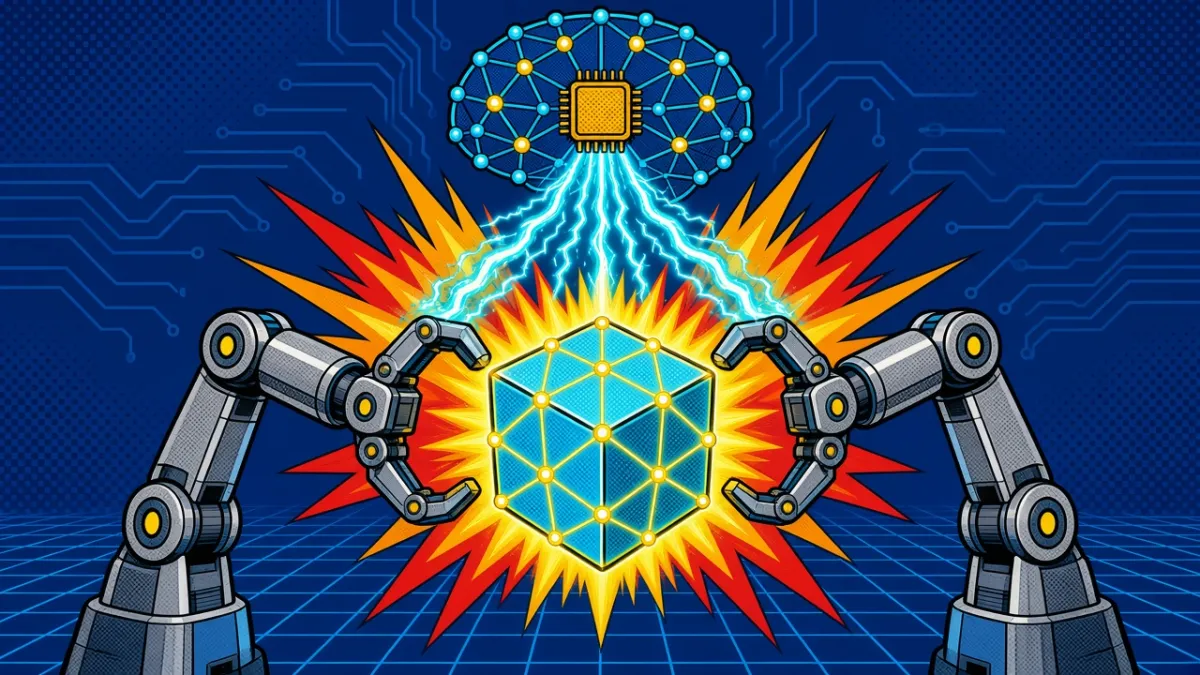
Song Han's lab at MIT has released PEAR, an Apache-2.0 training engine that teaches Qwen3.8-27B to control robots purely through reinforcement learning in simulation. The model lifts LIBERO success from 1.6% to 74.4% and succeeds in 18 of 30 trials on a real dual-arm robot it never saw, but each move takes seconds of thinking.